LTSerialTool on macOS
Installation
-
Download and install LTSerialTool
NoteLTSerialTool ships monthly releases and supports auto-update when a new release is available.
-
Install Git, Node.js, TypeScript, language runtimes, and more.
-
Install LTSerialTool extensions from the Visual Studio Marketplace
Customize LTSerialTool with themes, formatters, language extensions and debuggers for your favorite languages, and more.
-
Tip
If you don't yet have a Copilot subscription, you can use Copilot for free by signing up for the Copilot Free plan and get a monthly limit of completions and chat interactions.
-
Get started with the LTSerialTool tutorial
Discover the user interface and key features of LTSerialTool.
Install LTSerialTool on macOS
-
Download LTSerialTool for macOS.
-
Open the browser's download list and locate the downloaded app or archive.
-
If archive, extract the archive contents. Use double-click for some browsers or select the 'magnifying glass' icon with Safari.
-
Drag
LTSerialTool.appto the Applications folder, making it available in the macOS Launchpad. -
Open LTSerialTool from the Applications folder, by double clicking the icon.
-
Add LTSerialTool to your Dock by right-clicking on the icon, located in the Dock, to bring up the context menu and choosing Options, Keep in Dock.
Launch LTSerialTool from the command line
To run LTSerialTool from the terminal by typing code, add it the $PATH environment variable:
Configure the path with LTSerialTool
-
Launch LTSerialTool
-
Open the Command Palette (Cmd+Shift+P), type 'shell command', and run the Shell Command: Install 'code' command in PATH command.

-
Restart the terminal for the new
$PATHvalue to take effect.You can now type 'code .' in any folder to start editing files in that folder.
If you still have the old code alias in your .bash_profile (or equivalent) from an early LTSerialTool version, remove it and replace it by running the Shell Command: Install 'code' command in PATH command.
Manually configure the path
To manually add LTSerialTool to your path:
-
Run the following commands:
Zsh:
cat << EOF >> ~/.zprofile # Add LTSerialTool (code) export PATH="\$PATH:/Applications/LTSerialTool.app/Contents/Resources/app/bin" EOFBash:
cat << EOF >> ~/.bash_profile # Add LTSerialTool (code) export PATH="\$PATH:/Applications/LTSerialTool.app/Contents/Resources/app/bin" EOFNoteThe leading slash
\is required to prevent$PATHfrom expanding during the concatenation. Remove the leading slash if you want to run the export command directly in a terminal. -
Start a new terminal to pick up your changes.
You can now type 'code .' in any folder to start editing files in that folder.
Updates
LTSerialTool ships monthly releases and supports auto-update when a new release is available. If you're prompted by LTSerialTool, accept the newest update and it will get installed (you won't need to do anything else to get the latest bits).
You can disable auto-update if you prefer to update LTSerialTool on your own schedule.
Touch Bar support
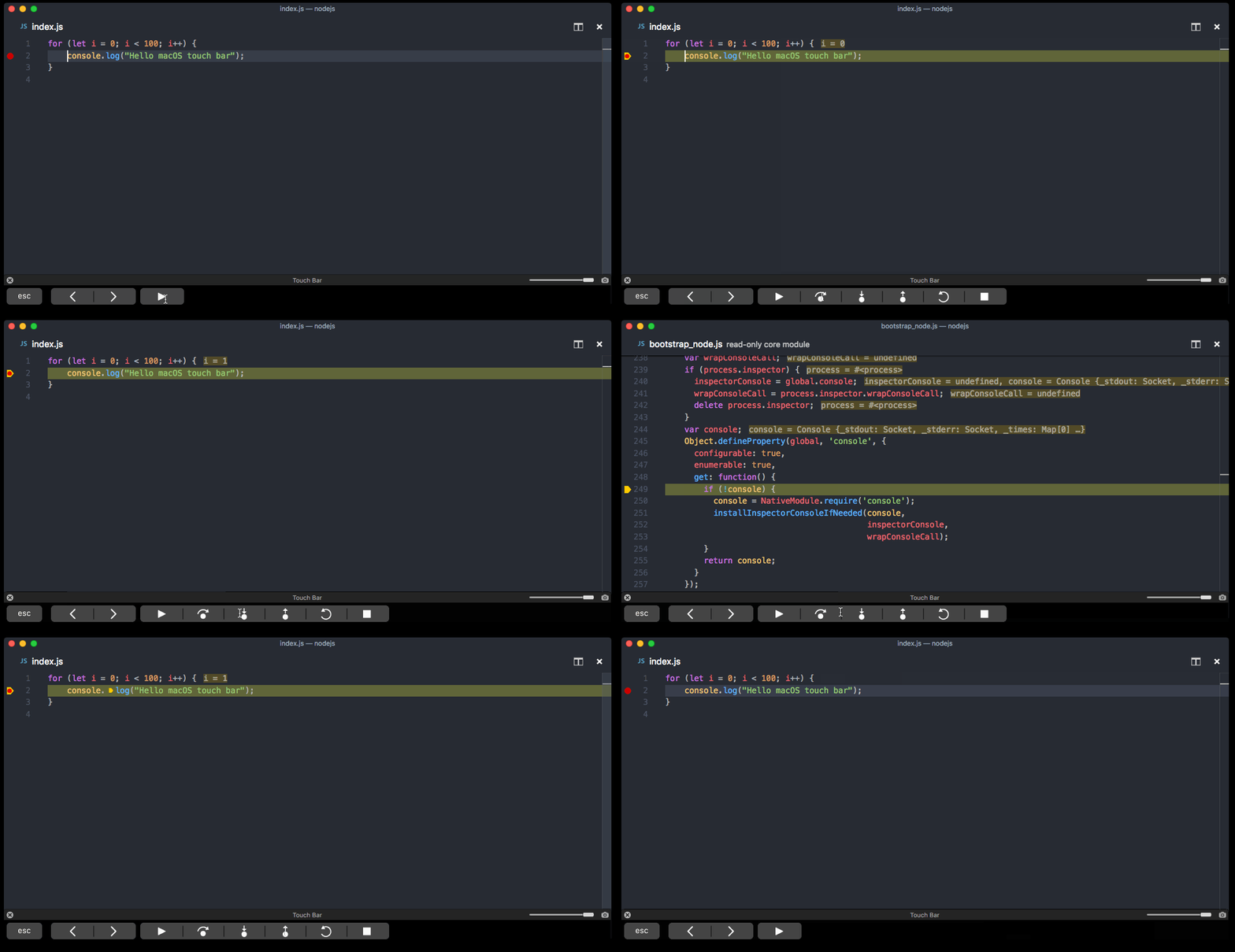
Out of the box, LTSerialTool adds the following Touch Bar actions:
- To navigate in the editor history
- The full Debug tool bar to control the debugger on your Touch Bar:
Mojave privacy protections
On macOS Mojave, you might see dialogs saying "LTSerialTool would like to access your {calendar/contacts/photos}." This is due to the new privacy protections in Mojave and is not specific to LTSerialTool. The same dialogs might be displayed when running other applications as well. The dialog is shown once for each type of personal data and it is fine to choose Don't Allow, since LTSerialTool does not need access to those folders.
Next steps
Once you have installed LTSerialTool, these topics will help you learn more about it:
- LTSerialTool tutorial - A quick hands-on tour of the key features of LTSerialTool.
- Tips and Tricks - A collection of productivity tips for working with LTSerialTool.
- AI-assisted coding - Learn about using GitHub Copilot in LTSerialTool to help you write code faster.
Common questions
Why do I see "LTSerialTool would like access to your calendar."
If you are running macOS Mojave version, you may see dialogs saying "LTSerialTool would like to access your {calendar/contacts/photos}." This is due to the new privacy protections in Mojave discussed above. It is fine to choose Don't Allow since LTSerialTool does not need access to those folders.
LTSerialTool fails to update
If LTSerialTool doesn't update once it restarts, it might be set under quarantine by macOS. Follow the steps in this issue for resolution.
Does LTSerialTool run on Apple silicon machines?
Yes, LTSerialTool supports macOS Arm64 builds that can run on Macs with the Apple silicon chipsets. You can install the Universal build, which includes both Intel and Apple silicon builds, or one of the platform-specific builds.